Perspectives

Decision stage
Thank you! Your submission has been received!
Oops! Something went wrong while submitting the form.
Maturity level
Thank you! Your submission has been received!
Oops! Something went wrong while submitting the form.
Capability domain
Thank you! Your submission has been received!
Oops! Something went wrong while submitting the form.
Industry-specific
Thank you! Your submission has been received!
Oops! Something went wrong while submitting the form.
Reset
Thank you! Your submission has been received!
Oops! Something went wrong while submitting the form.

The Same Leader, Two Very Different Planning Strategies: Why Context Changes Everything

Why Planning Strategy Depends on Context, Not Maturity Models
Why planning maturity isn’t one-size-fits-all — and how context, ownership, and constraints should shape proportionate supply chain decisions.
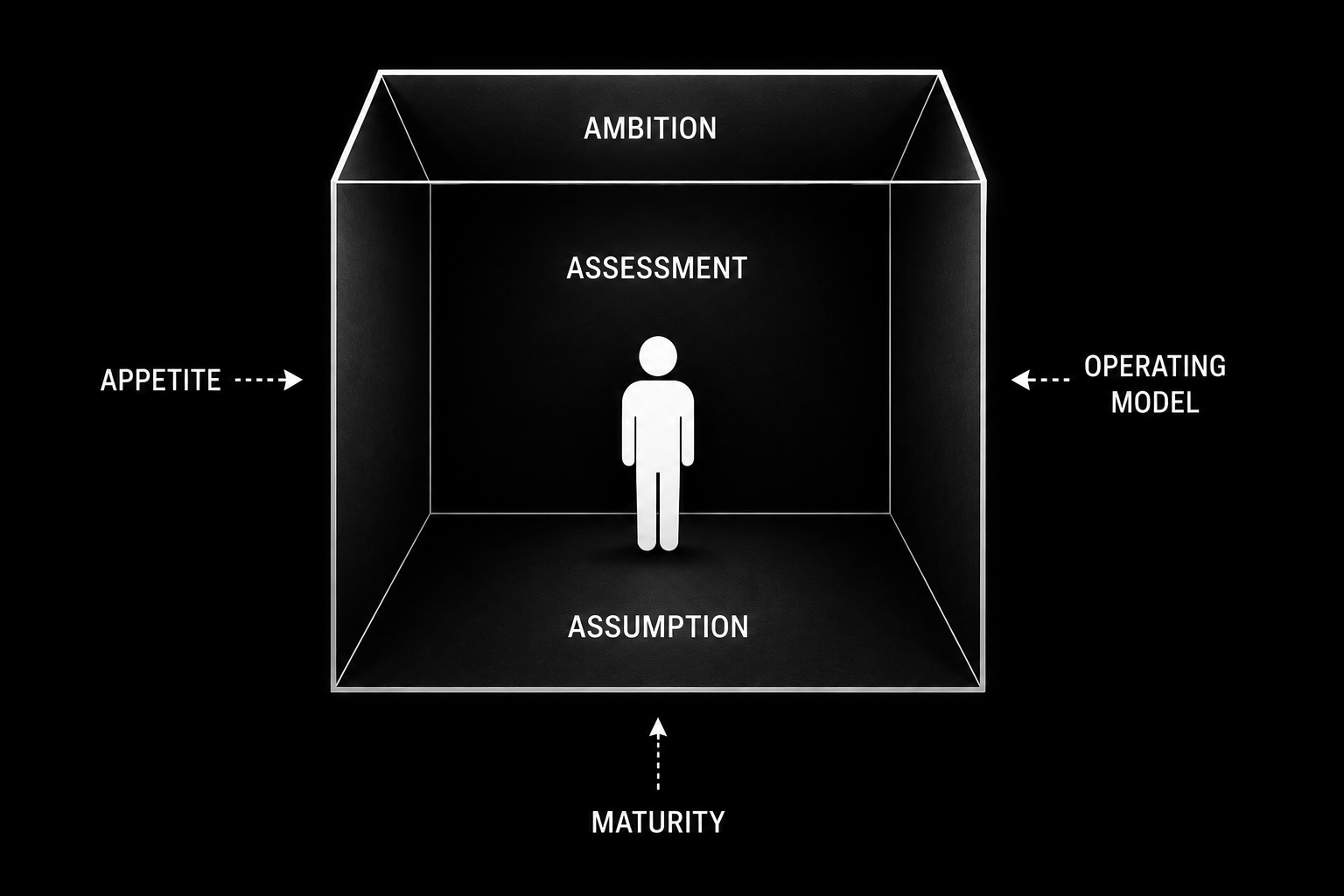
The same planning leader, two very different strategies. This Perspective explores how ownership model, maturity, and constraints reshape what “good” planning looks like — and why copying peers is often a costly mistake.
Consumer Goods
consumer-goods
orient
stabilise,optimise
planning,data,supply

Why End-to-End Planning Transformations Succeed or Fail Before Technology Is Chosen

Why Planning Transformations Fail Before Technology Is Chosen
Why supply chain planning transformations often fail before tools are selected — and how operating models, ROI discipline, and decision clarity change outcomes.
Most large planning transformations fail long before technology is implemented. Drawing on practitioner experience, this Perspective explores why problem definition, operating model design, and ROI discipline determine success before vendor selection begins.
Consumer Goods
consumer-goods
build
optimise,sustain
planning,data,supply

Why Data Foundations Decide Whether Supply Chain Change Ever Gets Off the Ground

Why data foundations decide whether supply chain change gets off the ground
Why do supply chain change initiatives stall before technology becomes the issue? Learn how weak data foundations, unclear decision needs, and over-engineered a
You may feel ready to invest in new supply chain technology, but progress often stalls much earlier — when data foundations are not aligned to real decision needs. Drawing on large-scale operational experience, Andy Devlin explains why decision-led data foundations matter, how to avoid “boiling the ocean,” and where to focus first to enable scalable change.
No items found.
orient,test
stabilise,optimise
data,resilience

Are Service Cost and Cash Really a Trade-Off — or a Planning Myth?

Is the Service–Cost–Cash Trade-Off Really Inevitable?
The service, cost and cash trade-off is widely accepted in supply chains. But is it unavoidable, or created by how planning decisions are made?
The trade-off between service, cost and cash is widely accepted in supply chains. This article challenges whether it is truly unavoidable, or a consequence of how planning decisions are framed.
No items found.
test
optimise
planning,data

Why Supply Chain Planning Keeps Failing — Even When “Nothing Is Broken”

Why Supply Chain Planning Breaks Down in Volatile Conditions
Many supply chains look stable but rely on fragile planning assumptions. Learn why average-based planning fails when volatility becomes structural.
Many supply chains appear stable but rely on planning assumptions that no longer hold. This article explains why average-based planning struggles in volatile environments and why failure often goes unnoticed.
No items found.
orient
stabilise
planning,resilience

From Insight to Commitment: Knowing When You’re Ready to Move

Decision readiness signals, when to commit | BestPractice.Club
Understand the signals that you’re ready to commit to transformation, how to set evidence thresholds, and how to maintain momentum without premature decisions.
Even when priorities are clear, organisations often stall because they don’t know what ‘ready’ looks like. This article sets out calm, practical signals of decision readiness: ownership, evidence thresholds, alignment on risk, and the ability to adapt when assumptions change. It also explains why post-event momentum often fades, and how to structure follow-up so it supports decisions without pushing premature sales conversations.
No items found.
commit
optimise,sustain
data,resilience

If the Data Were Reliable, Where Would You Start in Food & Beverage Supply Chains?

Data: Where to Start in Food & Beverage | BestPractice.Club
How food and beverage supply chain leaders decide where to focus first once data reliability improves and the questions to ask yourself.
A decision-led perspective on where to start in food and beverage supply chains once data improves, focusing on prioritisation, trade-offs, and decision leverage.
Food & Beverages
food-beverages
build
optimise
planning,logistics,data

If the Data Were Reliable, Where Would You Start in Industrial Manufacturing?

Industrial manufacturing prioritisation, where to start | BestPractice.Club
A practical perspective on where to start in industrial manufacturing once data improves—prioritising decision leverage, commitment points, and optionality.
Industrial manufacturing supply chains face long horizons, capital-intensive assets, and decisions that are hard to reverse. This article explores how leaders should prioritise once data reliability improves—focusing on commitment points, optionality, and scenarios that change capacity, sourcing, and customer promises. It’s for manufacturing leaders moving from analysis to sequencing: choosing the first moves that reduce regret and build resilience.
Industrial, Manufacturing & Engineering
industrial-manufacturing-engineering
build
optimise,sustain
planning,data,resilience

From Data to Decisions: What Actually Has to Be True for Value to Appear

Data to decisions conditions, what must be true | BestPractice.Club
Learn what must be true for data and technology investments to translate into real productivity and decision impact and where to start.
Once you accept that transformation is a decision problem, the next step is testing what must be true for value to appear. This article sets out practical enabling conditions that turn better data and systems into better decisions—process clarity, actionable agility, trusted data, and customer-facing productivity. It’s aimed at leaders who are pressure-testing readiness and assumptions before prioritising initiatives or engaging vendors.
No items found.
test
stabilise,optimise
data,planning

Why Digital Transformation So Often Fails to Deliver Value

Digital transformation value void, why it persists | BestPractice.Club
Understand why digital transformation often fails to deliver value in supply chains, what causes the value void, and how leaders can reframe the problem early.
Many transformation programmes stall not because the technology is wrong, but because organisations never align on which decisions matter most and what must change to improve them. This perspective introduces the 'value void' and explains why common explanations (data, change management, readiness) miss the underlying constraint: shared decision clarity. It’s for supply chain and transformation leaders who are orienting around where to start before investing in tools or programmes.
No items found.
orient
stabilise
data,planning

Interview: Tim Richardson on Designing Resilience for a Volatile World

Designing Resilient Supply Chains in a Permanently Volatile
Why volatility is now structural, not cyclical — and how supply-chain leaders must design resilience, clarity, and adaptability into their networks before the n
Supply chains designed for cost and efficiency are now operating in a permanently unstable world. In this conversation, Tim Richardson, CEO of Iter Consulting, explains why volatility is no longer cyclical, why confidence among supply-chain leaders has eroded, and why resilience must be designed into networks rather than bolted on after disruption hits. He argues that adaptability depends less on chasing new technology and more on clear thinking, sound foundations, and leadership capable of making decisions before the next crisis arrives.
Industrial, Manufacturing & Engineering
industrial-manufacturing-engineering
orient
stabilise,optimise
resilience,data

Trevor Jordaan on Becoming AI Fit and Building the Next Generation of Composable Supply Chains

Trevor Jordaan on Becoming AI Fit and Building the Next Generation of Composable Supply Chains
Consumer Goods
Food & Beverages
consumer-goods
food-beverages

What Iterative, Agile and Composable Approaches Really Mean in Practice

What Iterative, Agile and Composable Approaches Really Mean in Practice
No items found.
commit
data

From Monolith to Modularity: Lessons from Burberry’s Supply Chain IT Journey with Nick Miles

From Monolith to Modularity: Lessons from Burberry’s Supply Chain IT Journey with Nick Miles
Consumer Goods
Apparel & Fashion
consumer-goods
apparel-fashion
orient
stabilise
data,planning,resilience

Graham Whittemore on Composability, Integration and the Future of Supply Chain Tech

Graham Whittemore on Composability, Integration and the Future of Supply Chain Tech
No items found.
data

From School Disco to Sandbox: Why Supply Chains and Startups Still Find it Hard to Dance

Why supply chains and startups still find it hard to work together
No items found.

Ravi Wesley on Rethinking Supply Chain Innovation and Investment

Ravi Wesley on Rethinking Supply Chain Innovation and Investment
Apparel & Fashion
apparel-fashion
data,resilience

Prof. Glenn Parry on Value, Trust and the Future of Composable Supply Chains

Prof. Glenn Parry on Value, Trust and the Future of Composable Supply Chains
No items found.

Why the Current Innovation Model is Under Pressure: Part 6 - Innovation Culture

Why the Current Innovation Model is Under Pressure: Innovation Culture
No items found.
sustain

Why the Current Innovation Model is Under Pressure: Part 5 - Governance & Security Risks

Why the Current Innovation Model is Under Pressure: Governance & Security Risks
No items found.
optimise

Zoe Webster on How to Think About AI

Zoe Webster on How to Think About AI
No items found.
implement

Why the Current Innovation Model is Under Pressure: Part 4 - High Stakes, Hidden Costs & RoI

Why the Current Innovation Model is Under Pressure: High Stakes, Hidden Costs
No items found.
commit

John McFall & Martin McKie on How Composable Supply Chains Can Redefine Innovation

John McFall & Martin McKie on How Composable Supply Chains Can Redefine Innovation
Wholesale / Distribution
Retail
Apparel & Fashion
wholesale-distribution
retail
apparel-fashion
test
optimise

Why the Current Innovation Model is Under Pressure: Part 3 - Digital, Data and AI Fitness

Why the Current Innovation Model is Under Pressure: Data and AI Fitness
No items found.
test

Lidl's abandoned ERP implementation: lessons learned

Lidl's abandoned ERP implementation: lessons learned
Retail
retail
stabilise

Why the Current Innovation Model is Under Pressure - Part 2: Change Management

Why the Current Innovation Model is Under Pressure: Change Management
No items found.
build

Why the Current Innovation Model is Under Pressure - Part 1: Systems & Process Architecture

Why the Current Innovation Model is Under Pressure: Systems Architecture
No items found.
James Moffatt of Baringa explains why supply chain transformation so often stalls before technology becomes the constraint. From fragile data foundations and misaligned outsourcing economics to short-term leadership incentives, he outlines the structural barriers that slow progress—and why the only viable route to automation, resilience and decarbonisation is a deliberate, step-by-step maturity journey rather than a single leap to an ideal future state.
Consumer Goods
Food & Beverages
Apparel & Fashion
consumer-goods
food-beverages
apparel-fashion
build
sustain
resilience

M&A in Supply Chain & Logistics

M&A in Supply Chain & Logistics - what's driving or slowing activity?
No items found.

Value creation opportunities in 2025

Value creation opportunities for supply chain and logistics in 2025
No items found.

Why Supply Chain Strategy and Business Strategy Drift Apart

Why Supply Chain Strategy and Business Strategy Drift Apart
No items found.

Why Investors are Paying Closer Attention to Supply Chain & Logistics

Why Investors are Paying Closer Attention to Supply Chain & Logistics
No items found.

Do I need to invest in a planning platform to create value?

Do I need to invest in a planning platform to create value?
What you can do today before spending anything on new tech by focusing and simplifying your S&OP / IBP process to optimise inventory.
The post argues that supply chain forecasting often fails because companies focus on tools rather than decisions. Drawing on multinational IBP and S&OP experience, it highlights how over-complex AI-driven systems are frequently adopted before organisations are clear on what they actually need to decide, over what time horizons, and at what level of detail. Clean, reliable data must come before technology, and simpler, iterative forecasting approaches—often piloted or custom-built—can deliver faster, cheaper value than defaulting to large, “safe” vendors. The real objective is not perfect forecast accuracy, but greater execution agility in an increasingly volatile environment.
Apparel & Fashion
apparel-fashion
planning